What are you in for?
Set your conditions.
When suits?
Nearly there.
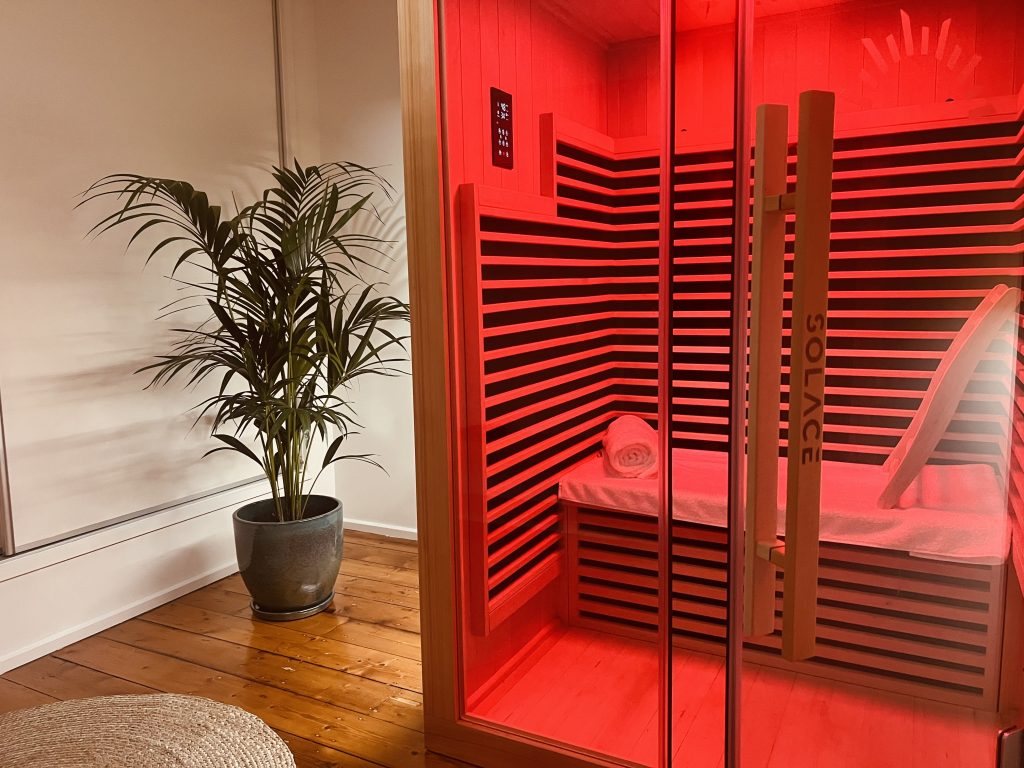
The infrared sauna
Infrared warms your body directly instead of heating the air around you. Your core temperature climbs the same way it would in a traditional sauna, but the cabin stays at a level most people can sit in comfortably and breathe easily, so you last longer and get more out of it.
Why people keep coming back.
Your heart works while you sit still
Heat widens the blood vessels and pushes heart rate up to somewhere between 100 and 150 beats a minute, which is roughly what moderate exercise does. Long-running Finnish population studies have linked frequent sauna use with lower blood pressure and fewer cardiovascular events over time.
Muscles let go
Blood flow to skin and muscle rises sharply in the heat. Warm tissue stretches more easily, and most people report less stiffness and soreness in the day or two after hard training or a long day on their feet.
Sleep comes more easily
Warming up and then cooling down copies the natural drop in core temperature that happens as you fall asleep. A sauna an hour or two before bed is a well-worn trick for getting off to sleep faster.
Stress drops on the way out
Heat is a mild, controlled stress. When you step out, the nervous system swings the other way, and most people feel calm and heavy-limbed for an hour or more afterwards.
Skin gets a proper clean-out
Half an hour of steady sweating flushes the pores. Rinse straight after so nothing settles back on the skin.
Practice at being uncomfortable
Sitting with heat you would rather escape is a small, safe rehearsal for keeping your head when something unpleasant is happening. That is the whole point of the 25 minute challenge.
- Tell us your temperatureAnywhere from a gentle 40 up to a full 65. Pick it when you book and the cabin is at temperature before you arrive.
- Five minutes to get setChange, grab a towel to sit on, and take water in with you.
- Thirty minutes in the cabinSit or lie down. Come out whenever you have had enough, nobody is timing you except during the challenge.
- Five minutes to tidyRinse off, wipe the bench down, and drink more water than you think you need.
Before you book, read this bit properly
- Do not use the sauna if you are pregnant, have a heart condition, high or low blood pressure, or epilepsy, unless your doctor has said it is fine.
- Never after drinking alcohol, and not on an empty stomach.
- Some medications affect how you sweat and regulate temperature. Check yours.
- Come out the moment you feel dizzy, sick, or notice you have stopped sweating.
- Drink water before and after. A large glass each way is the minimum.
- Under 16s only with a parent present, and for shorter sessions at lower temperatures.
General wellbeing information, not medical advice. If you have a health condition, are pregnant, or take regular medication, check with your doctor or midwife before booking. Everything here is run out of a family home by kids, with an adult present for every session.
Ready when you are.
Pick a day and a time, and add the other two if you fancy the full circuit.
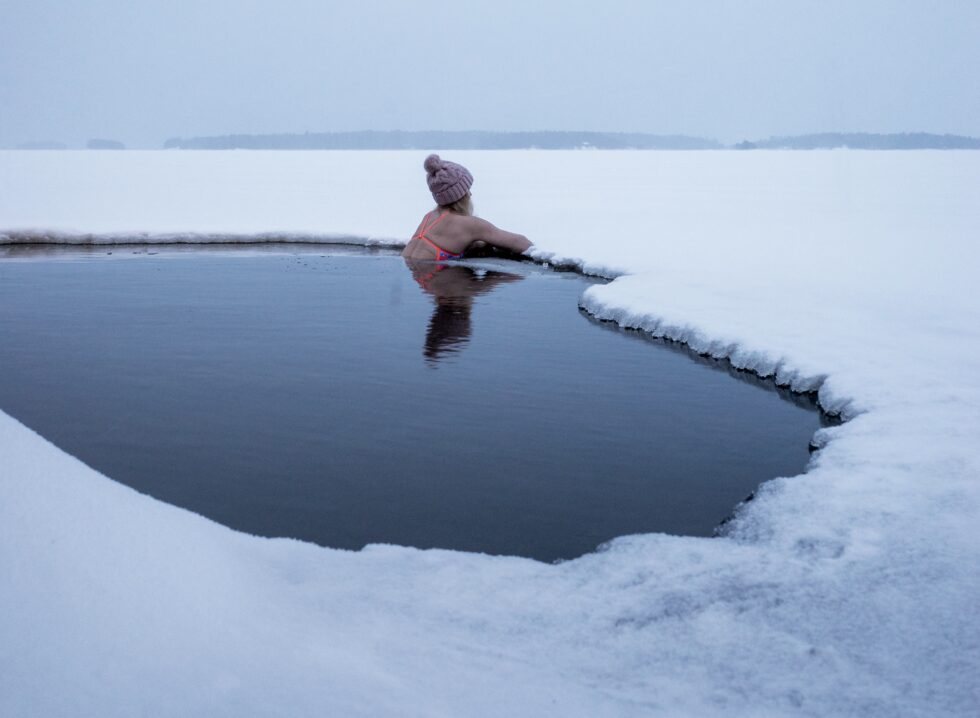
The cold plunge
A 500 litre chest freezer converted into a plunge tub and held at 8 degrees. Someone stays beside the bath the whole time you are in it. If eight sounds like too much for a first go, the swimming pool sits around fifteen and nobody will think less of you for starting there.
Why people keep coming back.
A lift that lasts for hours
Cold water immersion raises noradrenaline substantially and nudges dopamine up with it. In plain terms, that is the bright, clear-headed feeling people describe for the rest of the morning. It is the most reliable thing cold water does.
Swelling and soreness come down
Cold narrows the blood vessels and slows the inflammatory response, which is why it has been used on sports injuries for decades. Worth knowing: if you are lifting for strength or size, plunging straight afterwards may blunt some of the adaptation, so leave a few hours between the two.
You learn to control your breathing
The first thirty seconds sets off a gasp and a racing heart. Slowing your breath through it is a skill, and it carries over to anywhere else your body panics ahead of your brain.
Metabolism gets a nudge
Cold exposure switches on brown fat, the tissue that burns energy to make heat. The effect is real but small, so treat it as a bonus rather than a plan.
The nervous system resets
Heart rate variability tends to rise in the period after a plunge, which is a marker of the body moving into its rest and recover mode.
You did a hard thing before breakfast
Difficult to measure and difficult to argue with. People come out of the tub standing straighter than they got in.
- Choose your coldThe plunge at 8 degrees, or the pool at around 15 if you are building up. The five minute challenge only counts in the plunge.
- Breathe before you get inSlow breaths out for a minute beforehand. Do not hyperventilate, and never breath-hold in the water.
- Lower in, shoulders under, head outSomeone is beside the bath the whole time. Get your breathing flat before you settle.
- Warm up the slow wayTowel off and move about. Your temperature keeps dropping for a few minutes after you get out, so no hot shower straight away.
Before you book, read this bit properly
- The first thirty seconds is the hardest part and the riskiest. Cold shock makes you gasp, so your head never goes under.
- Never plunge alone. There is always an adult beside the tub.
- Not for you if you have a heart condition, high blood pressure, Raynaud's, cold urticaria, or are pregnant, unless your doctor has cleared it.
- Tell us if you have asthma. Cold air and cold water can set it off.
- Get out if you start shaking hard, lose feeling in your hands, or stop being able to speak clearly.
- No alcohol beforehand, and do not plunge straight after a heavy meal.
- Afterdrop is real: you keep cooling for a while once you are out. Warm up gradually rather than jumping into a hot shower.
General wellbeing information, not medical advice. If you have a health condition, are pregnant, or take regular medication, check with your doctor or midwife before booking. Everything here is run out of a family home by kids, with an adult present for every session.
Ready when you are.
Pick a day and a time, and add the other two if you fancy the full circuit.
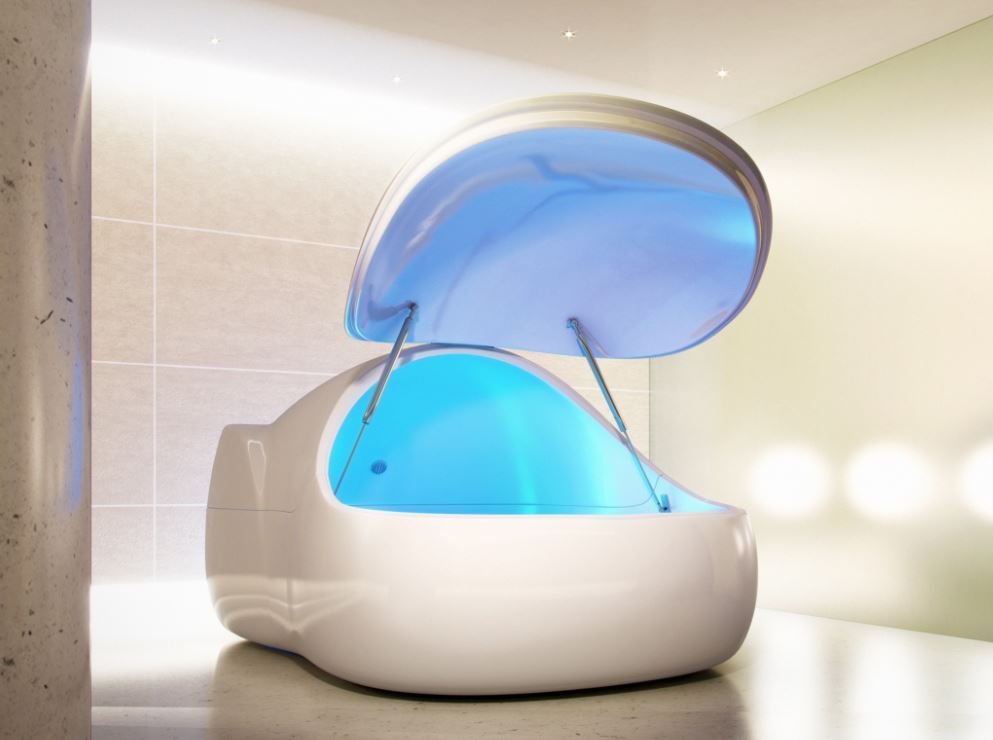
The float tank
Half a tonne of Epsom salt dissolved into water held at skin temperature. There is so much magnesium sulfate in it that you float without any effort at all, and because the water matches your body, after a few minutes you stop being able to tell where you end and the water begins.
Why people keep coming back.
Anxiety comes down, measurably
Floating is studied under the name Reduced Environmental Stimulation Therapy. Trials have found meaningful falls in anxiety and lifts in mood after a single session, with the biggest changes in the people who were most anxious to start with.
Your spine comes off duty
Gravity is the one load your back never gets a break from. An hour of neutral buoyancy takes it off the discs and joints completely. People with back or joint pain usually notice this one first.
Blood pressure and cortisol ease off
Sessions have been shown to lower blood pressure and stress hormone levels, and the effect tends to carry on past the end of the hour rather than stopping at the door.
The brain changes gear
With no light, no sound and almost no signal from the body about where it is in space, brain activity drifts towards the slower theta rhythms you get on the edge of sleep. That is what people mean when they say an hour felt like a whole night.
Salt on the skin
The evidence that you absorb useful amounts of magnesium through skin is thin, so we will not oversell it. What the salt definitely does is leave your skin soft and take every bit of effort out of staying afloat.
An hour with nothing to react to
No notifications, no conversation, nothing to look at. That is rarer than it should be, and a fair part of why people come back.
- Shower first, properlySoap off and rinse. Contact lenses out. If you have shaved or waxed today, come another day, because the salt will let you know about it.
- Fifteen minutes to set upEarplugs in, a smear of petroleum jelly on any small cuts, then in you get.
- Sixty minutes in the tankLight on or off, music or silence, door open or closed. All of it is your call and you can change your mind at any point.
- Fifteen minutes to come roundShower the salt off, sit down, drink something. Do not stand up in a hurry.
Before you book, read this bit properly
- No shaving or waxing on the day. Salt water on fresh skin stings badly.
- Contact lenses out before you get in.
- Cover small cuts and grazes with petroleum jelly. Open wounds mean another day.
- Not suitable if you have epilepsy, a skin infection, an ear infection, or have been drinking.
- Pregnant floaters should check with their midwife first. Many find it a relief, but ask.
- Claustrophobia is easily handled: the door never locks, it can stay open, and the light can stay on the whole time.
- Never float alone. An adult is in the house and within earshot for every session.
General wellbeing information, not medical advice. If you have a health condition, are pregnant, or take regular medication, check with your doctor or midwife before booking. Everything here is run out of a family home by kids, with an adult present for every session.
Ready when you are.
Pick a day and a time, and add the other two if you fancy the full circuit.
Two challenges.
Beat either and your next session of that kind costs nothing. Both are harder than they read on a screen.
The full heat
Twenty-five minutes at 65°C and your next sauna is free. The clock starts when the cabin reaches temperature, not when you sit down.
Five in the cold
Five minutes at 8°C wins your next plunge free. Get your breathing flat before your shoulders go under. Someone stays beside the bath the entire time.
The honest option
Not feeling the ice? The pool sits around 15°C, cold enough for the same buzz without the shock. Same price, no challenge, no judgement from anyone.
Control room.
Sign in
Enter the staff password to manage bookings, prices and opening hours.